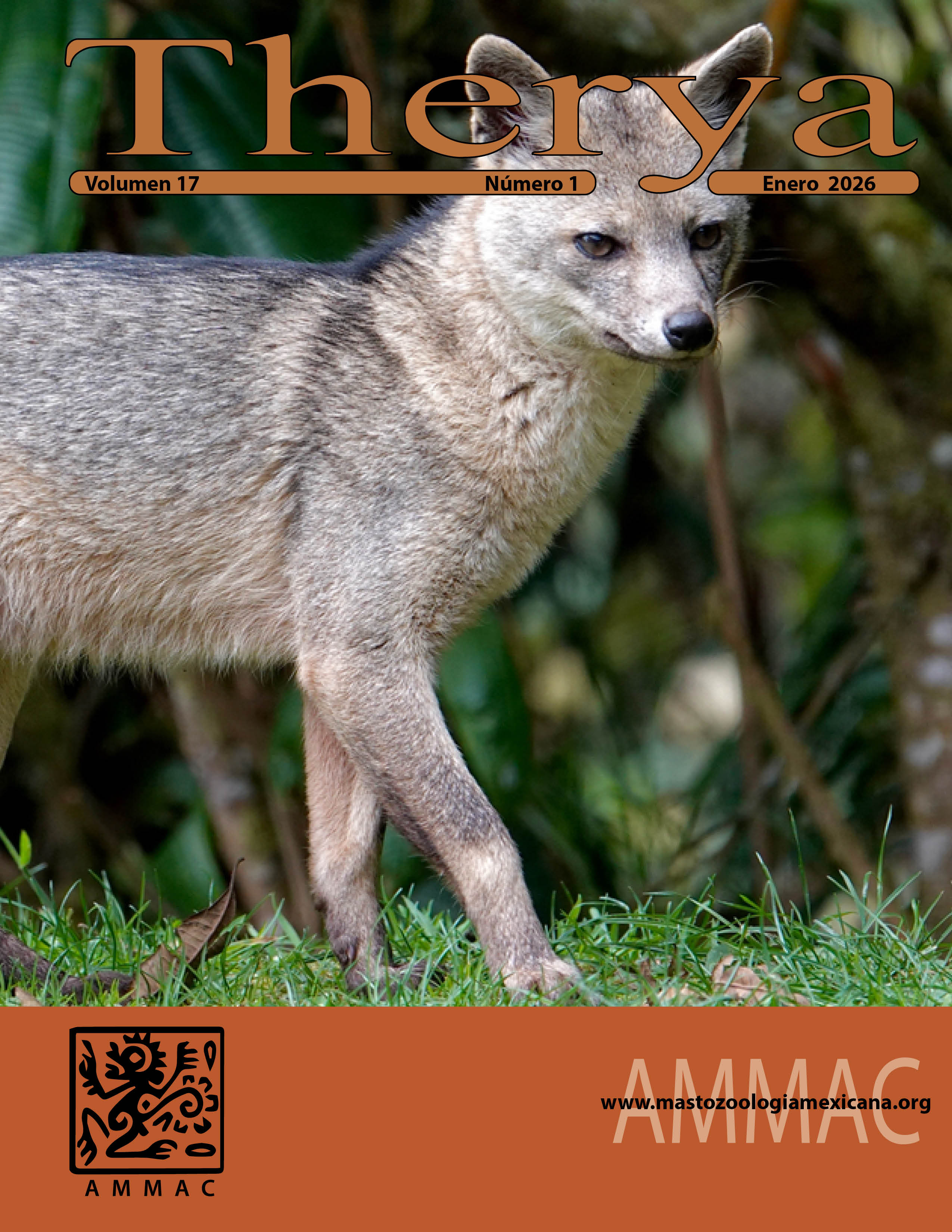
Trophic ecology of Cerdocyon thous and Lycalopex gymnocercus within the Iberá Ecoregion in Argentina
DOI:
https://doi.org/10.12933/therya.2026.6207Keywords:
Canids, coexistence, food availability, Mburucuyá National Park, trophic overlap, resource partitioningAbstract
This study analyzed the diet, trophic niche overlap, and resource selection of two sympatric foxes, Cerdocyon thous and Lycalopex gymnocercus, in Mburucuyá National Park, a protected area within the Iberá Ecoregion, Argentina. Between December 2014 and November 2015, a total of 293 scat samples were analyzed, with 44% identified as C. thous and 56% as L. gymnocercus. The analysis revealed 11 plant species and 27 animal taxa that were consumed by both foxes. The results suggest that both species are hypocarnivorous and have overlapping trophic niches throughout the year, although they exhibit seasonal variations in their trophic amplitudes. During the winter months, when fruit availability was low, both species displayed more active foraging behavior. This selective foraging was evidenced by their consumption of specific palm species, which likely represent a critical nutritional source. Although insects and arachnids (weighing between 0.1 and 10 grams) were their most common prey, meso and small mammals constituted approximately 90% of the consumed biomass due to their larger size. Further research should focus on the trophic plasticity of these foxes in other environments and on quantifying the nutritional contributions of different food sources. Comparing these findings from a protected area to those from anthropogenically disturbed environments will be crucial for understanding the species´ conservation needs.
Downloads
Published
How to Cite
Issue
Section
License
THERYA is based on its open access policy allowing free download of the complete contents of the magazine in digital format. It also authorizes the author to place the article in the format published by the magazine on your personal website, or in an open access repository, distribute copies of the article published in electronic or printed format that the author deems appropriate, and reuse part or whole article in own articles or future books, giving the corresponding credits.